2018年9月4日星期二

Tiny ‘hearing’ device is 100,000 times thinner than your eardrum

Finding long-range, low-powered sensors for wearable devices is the next scientific frontier. Researchers at Case Western Reserve University are working on atomically thin transducer "drumheads" that can send and receive signals at radio frequencies even greater than those we can hear with our natural ear. Better yet, the drumhead is 10,000,000,000,000 times smaller in volume and 100,000 times thinner than the human eardrum and can detect a much wider range of signal than other similar devices.

The paper, published in the March 30th issue of Science Advances, says that the super small vibrating sensor can detect signals at the highest reported dynamic range of frequencies, up to ~110dB, at radio frequencies (RF) up to over 120MHz. Human hearing is generally in the range of around 60 to 100dB in the range of 10Hz to 10kHz.
While the transducer itself isn't immediately applicable to current devices, the research will likely help inform future devices. "Sensing and communication are key to a connected world," said associate professor and co-author Philip Feng in a statement. "In recent decades, we have been connected with highly miniaturized devices and systems, and we have been pursuing ever-shrinking sizes for those devices."
from Drugdu  https://goo.gl/QgQoHk

Patent Submission – Wearable Biometric Scanner Based EHR System

According to a patent application, it has been reported that Walmart’s current investigation of blockchain technologies have met healthcare demands.
Blockchain technologies have devised a method to obtain a patient’s health records from a blockchain database even if they are unable to communicate. A verification from two different keys is needed for this step.
  • A public key in a wearable scanned by emergency responders via RFID.
  • A private key obtained by scanning a patient’s biometric signature.
Both public and private keys are mandatory to access the patient’s record. The private key would be specific to each individual user.
The spokesperson from Walmart said, “If medical records were stored on the blockchain, the private key of the patient would be needed to view/modify the records. In the case where a user is unconscious or incapacitated in an emergency, a first responder could not access the user's medical records stored on the blockchain; thus, there is a need for a method and system for obtaining a medical record stored on the blockchain when the owner of the private key cannot readily provide the private key.”
For smooth functioning, an RFID scanner is needed to scan the wearable and obtain the public key. Also, a biometric scanning device is needed to verify a bodily feature of the patient (a fingerprint, an iris, a retina, or any facial feature) for accessing the private key. This method would allow the first responders to quickly access the complete health record of the patient. This also ensures that the EHR can be kept inaccessible to others.
from Drugdu  https://goo.gl/QgQoHk

Wearable devices for business vs. fitness

Wearables, like smartwatches and fitness trackers, are popular with business professionals, and for good reason. The devices can collect data and provide insights, allowing wearers to track their fitness and productivity to reach their goals faster.
But some devices may not work the best for business professionals. They may not have enough ways to stay connected in terms of communications, or they may be too focused on physical goals like meditation. And some may stand out too much for professionals in formal business attire to feel comfortable wearing them.
How to choose a wearable for business
Connectivity is the first thing to consider when selecting a wearable for business purposes. Some options can connect to a smartphone, while others work outside of a cellular network. Some professionals need constant access to business communication, and selecting a wearable that works in tandem with a smartphone can provide that.
Think about what you want to accomplish with your wearable. Do you want to just be able to see notifications, or do you need to be able to answer texts and emails as well? What about activity tracking? It can help you understand how you spend your hours to find ways to become more productive, or you can use it for fitness purposes as well.
Apps and integrations can be helpful for business professionals, so check out what is available. Some, especially ones connected to a smartphone, have multiple options, while others have fewer choices. Integrations can streamline things between your wearable and other devices, potentially making you more efficient. Apps can offer new ways to boost productivity.
Mindfulness features are also helpful, especially in high-stress jobs or industries. A sleep tracker can help understand if you're sleeping long or well enough.
Finally, looks aren't everything, but some wearables can stand out when worn with business attire. More wearables are adopting the look of traditional watches, with leather bands and sleek faces. A wearable won't do much if you don't wear it because of its look.
How to choose a wearable for fitness
First, you should consider if you want one device to carry from work to the gym, or if you want separate options. Some popular devices, like the Apple Watch, can work for both environments due to the number of features and connectivity options.
Much like with business wearables, you need to consider what exactly the fitness tracker needs to do. Most will offer the same baseline metrics, but others offer more analytics. How much insight do you want into your workouts? Some only need simple step tracking, but someone training for a marathon may need more detail.
In what physical environment are you going to use the device? Whatever the answer, the tracker should be ready. For example, if you're a swimmer, you obviously need a water-resistant device. Runners may want a device with a built-in GPS so they can track their runs.
You should also consider the tracker's connected app if it has one. What analysis and insights can you get on the app? Does it have features to track food and water intake? Like with business wearables, integrations may also be important, so review the offerings.
from Drugdu  https://goo.gl/QgQoHk

How do Clinical Wearables Impact Patient Care and Quality of Life?

Health technology and clinical wearables are hot topics in the healthcare and pharmaceutical industries. They are creating waves of excitement and talking points for debate, while also topping many of the healthcare trends of this year.

One source suggests that 2018 will be the year of digital health technology, and it is quickly becoming apparent that clinical wearables are one of the most sought-after innovations when it comes to digital health. With the market growing and diversifying in compelling ways, it is worth looking at how clinical wearables are improving access to treatment, enhancing quality of life, and helping with the diagnosis and prognosis of certain conditions. 

What are Clinical Wearables? 

Clinical wearables can be defined as health technology that can be worn by the patient. The wearables contain sensors and use a wireless connection to pass data onto a smartphone or similar device. Wearables are being utilized in the healthcare industry in order to help healthcare practitioners collect, analyze, and leverage patient data for clinical trials, while also significantly improving patient care and overall quality of life. 
Clinical wearables aim to diagnose conditions earlier, minimize hospital stays and reduce invasive treatment options. In addition to this, they can help to cut medical cost and speed up rehabilitation times.

How is the Market for Clinical Wearables Growing?

As the years progress, the potential and ultimate value of clinical wearables are becoming more and more evident, which is why the global wearable medical devices market is set to reach $19.5 billion by 2021. In fact, health technology, in general, is a booming industry, growing by nearly 200% between 2010 and 2014. There now exist over 165,000 health-related apps on the Apple App Store, demonstrating just how in-demand this new form of technology is. 
Behind this surge in popularity are a number of factors, including an aging population, an increased patient interest in healthcare and medicine, and lifestyles that are generally more stress-inducing or challenging. Patients are no longer content to simply let medical professionals take the steering wheel with regards to their health. They want to have a say in their patient care and they want a more personal experience. This is where clinical wearables come in to play. 

How do Clinical Wearables Impact Patient Care and Quality of Life? 

Clinical wearables can help with disease management, monitoring and feedback, rehabilitation and health processes. The use of such wearables can help when it comes to the diagnosis and monitoring of a range of diseases (which will be mentioned below). Wearables can also help patients when it comes to adhering to a care plan, reminding them to take drugs, to calm down, or to seek help. 
The data collected by wearables is even being used to assess the effectiveness of new treatment plans while building mutually-beneficial relationships between doctors and patients. According to one study, of the patients surveyed, 96% of the respondents agreed that the use of clinical wearables helped to improve quality of life. There is also evidence to suggest that the use of wearables can even help to improve the well-being of the patient’s family.
Clinical wearables are being used to treat a range of diseases and disorders
Over the years, there have been huge strides in the field of clinical wearables, and today they are being used to monitor and treat a myriad of diseases and disorders. The hope for many is that the data collected from these devices can go on to not only help individual patients, but to resolve widespread pharmaceutical market access issues. 
Sufferers of asthma attacks now have access to an integrated wearable system that can monitor an individual’s environment, meaning it is possible to predict — and even prevent — asthma attacks.
Wearables are being used to help with the treatment of diabetes. In fact, researchers from the University of Texas have created a clinical wearable tool that measures diabetes-related compounds in patients’ sweat, which can be monitored for up to a week. The creators believe that the wearables give patients more control over their care. 
Wearables are also being helped to monitor Chronic Obstructive Pulmonary Disease (COPD), as they are able to track a patient’s heart rate, blood pressure, blood oxygen saturation, and glucose levels. 
It has recently been stated that the future of improved brain health can be achieved through digital health technology. This is certainly something we’re seeing with Alzheimer’s patients, of whom there are an estimated 47 million worldwide. With the use of wearables and patient monitoring devices, patients are now able to stay at home for longer, with the use of sensors that are placed around the individual’s home and on their body. The impact on quality of life is incredible, as the monitors are able to detect if patients miss a meal, have a fall, or don’t emerge from bed. 
Atrial fibrillation (AFib), the most common heart arrhythmia and a leading cause of strokes, is also being monitored by clinical wearables. The Apple Heart Study app is being used by AFib patients so doctors can monitor data on irregular heart rhythms. This is important as, incredibly, two out of three strokes are actually preventable if AFib is detected and appropriately treated.
On top of the disorders and diseases listed above, there are conditions such as obstructive pulmonary disease, Parkinson’s disease, and hypertension that can be improved and monitored with the use of wearables. As we move forward and technology and medical research advances, it is likely that this list will grow significantly and that patients will benefit from improved care and quality of life.
from Drugdu  https://goo.gl/QgQoHk

Mobile-Health applications and wearables, to improve medication Adherence

Consumers are depending on mHealth applications and wearable devices to improve their medication abidance.

A survey conducted for the Express Script on 800 prescription medication user, founds that half of them trust mHealth technology to help them to become steady and one-third stated that they would like to use mHealth applications or devices if it were installed for them.  Experts say half of all medication users are not consuming their drugs as prescribed, costing $300 billion a year in avoiding healthcare expense. Medication adherence is the biggest issue healthcare experts have aimed to solve more assertively.
Nearly half of those surveyed said, consuming their prescribed drug is the most important part of their health regimen, a percentage higher than those selecting a routine check-up (30 percent). 56 percent said reminders would help them to improve medication stability and 19 percent said, this kind of nudge would definitely help them.
That’s where mHealth comes in.
“The three main aspect of non-adherence comes from cost, clinical or behavioral reasons, and this aspect can be solved through mobile health tools,” said Kyle Amelung, PharmD, BCPS, a senior clinical consultant on Express Scripts.
from Drugdu  https://goo.gl/QgQoHk

LifePlus announces glucose monitoring wearable

Now you can monitor your blood glucose levels just by looking at your wrist if LifePlus has its way. The startup has announced what it has hailed as the first noninvasive continuous blood glucose monitoring multi-sensor wearable.   

Named LifeLeaf, the device has the potential to revolutionize the mushrooming medical wearables segment.
The company announced that the innovative product, whose technological details are not known yet, is undergoing clinical trials in five cities across the world.
The patent-pending invention is based on open standards software and cloud-based analytics. The system gives users real-time notifications and cloud-based AI solutions.
John Trobough, executive chairman of the board, said that the startup, which had been in stealth mode, is excited to announce the introduction of LifeLeaf. He stressed the importance of early detection and management of diabetes and other chronic diseases. He termed LifeLeaf as a unique product and software technology available. “It is truly unique and we are excited to make this multi-sensor capability available to companies and developers globally,” he said.
The multi-sensor smartwatch contains embedded algorithms which extract key parameters, which are then sent to the user’s smartphone interface. Based on the glucose levels, users can decide if they want to alert their doctor.
The device can non-invasively monitor heart rates, chronic health conditions including diabetes, cardiac arrhythmia, congestive heart failure, COPD, sleep apnea, hypertension, respiration rate, blood pressure, and oxygen saturation.
LifeLeaf and LifePlus don’t have clearance from the FDA. The company claims to have the first noninvasive continuous blood glucose monitoring multi-sensor wearable. However, players like Prediktor Medical also have similar wearables currently undergoing development and testing.
from Drugdu  https://goo.gl/QgQoHk

iBeat Raises Investment for its Continuous Monitor mHealth Wearable; Heart Watch

San Francisco-based company iBeat, a mHealth wearable development company has announced new funding from form SCOR Life & Transamerica Ventures and Health Ventures for its mHealth devices, Heart Watch which continuously monitors the heart. iBeat did not state what the total amount was, only that the investments round was “upward of seven figures”.

 “The Heart Watch is one of a kind which keeps continuous monitoring of the heart and offers life-saving assistance in the most critical situation.” Stated Mr. Ryan Howard, founder, and CEO of iBeat.
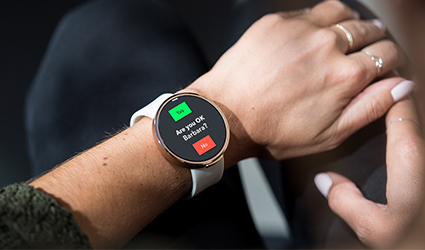
The mHealth wearable has been developed to continuously monitor heart rates, hypoxemia and blood flow. The watch also alerts the user or emergency services if abnormalities are detected. According to the developers, the device is perfect for the aging populations.
According to iBeat, it is planning to spend the investments on further developments of the Heart Watch and to advance marketing. The company also stated that till now they have received more than 11,000 pre-orders for the Heart Watch will start shipping those orders out this summer.
from Drugdu  https://goo.gl/QgQoHk